


While most homeowners tend to focus on walls, flooring, and furniture, they forget to consider the impact new interior doors can have. Interior doors play an important role when it comes to shaping light and flow within residential areas. From their material, specifications, size, and design, interior doors can dramatically influence how natural and artificial light travels through spaces. They also dictate how connected spaces feel and the overall aesthetics.
Understanding these elements is essential for homeowners who want a home that’s both functional and harmonious. Full renovations can definitely freshen up entire rooms, but sometimes just replacing an old door can be the simplest upgrade with both practical and visual benefits. So, let’s talk about that!
Why Interior Doors Matter More Than You Think
It’s easy to think of doors as just slabs that open and close, when in reality interior doors are pulling a lot of weight in your home’s design.
Doors act as vital architectural tools for creating visual continuity; the seamless flow of sightlines, materials, and light makes a home feel spacious, cohesive, and deliberate. On the other hand, doors are one of the largest visual elements in any room, which is why their style should not clash with your trim or flooring. This can make the entire space feel disjointed.
At the same time, new interior doors can shape how people actually move through a home, whether that’s a wide swing for an open layout or a pocket door that saves space in a tight hallway. The right choice will make your daily life easier.
One of the most important aspects to consider when choosing the right door for your space is functionality. For example, privacy is an obvious one, but it’s also easy to overlook. A solid door between a bedroom and a busy living area does far more than a curtain or an open doorway. Acoustics matter here too. Hollow core doors let sound pass right through, while solid doors will actually dampen noise between rooms. Anyone who’s tried to work from home with kids around already knows how much this matters.
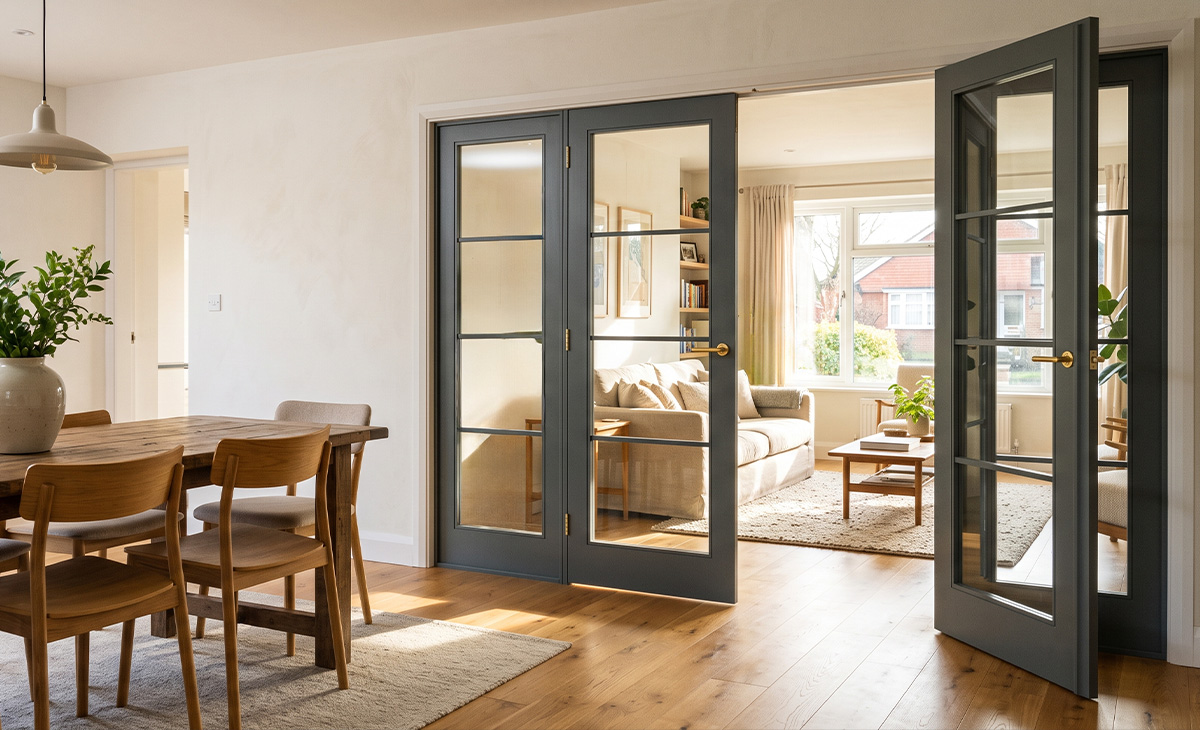
Additionally, don’t overlook the importance of natural light. Doors with glass panes, like French doors or simple sidelights, can pull daylight into hallways or interior rooms that would otherwise feel dim and closed off.
Increase Natural Light with the Right Door Style
Interior doors have a bigger impact on brightness than most people realize. They come in a variety of materials, each influencing durability and light transmission differently.
Glazed Doors
Glass panels are one of the easiest ways to bring more light into a space without knocking down walls. Frosted glass will soften the light while still keeping sightlines private, which makes it a solid pick for bathrooms or home offices. That balance of light and privacy matters more than it seems, since a well-designed home office can have a real effect on focus and daily comfort.
Clear glass lets light travel through with zero obstruction, ideal for spaces where privacy is not a big concern, like living rooms or a sunroom entry. Reeded glass sits somewhere in between. It adds texture and a bit of visual interest while still letting daylight filter through.
Light Colors and Slim Frames
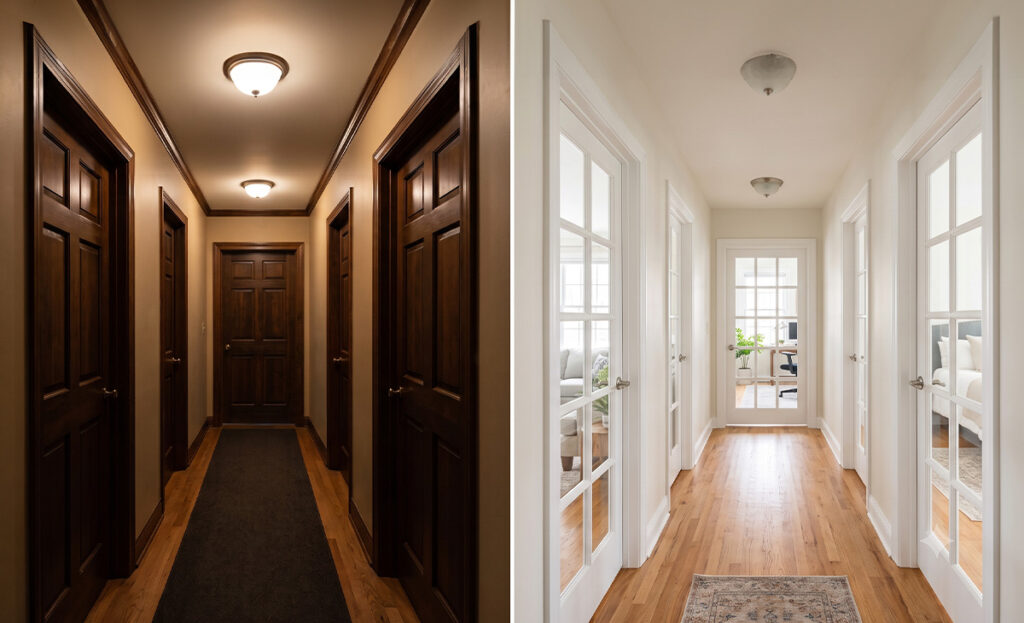
Beyond just the glass panels, the color and frame of a door play a role, too. Lighter finishes, like whites, soft greys, and natural wood tones, reflect light rather than absorbing it. This helps a room feel much brighter and more open even without any glass at all. Pairing that with slim frames means less bulk blocking the doorway, so light and sightlines can travel more freely between spaces.
This combination is ideal for hallways, home offices, kitchens, and dining rooms; spaces that either lack direct sunlight or can benefit from feeling more open and connected.
Improve the Flow Between Rooms
The right doors don’t just look good; they are designed to make a home feel more connected. Interior doors should share a consistent style to create a visual thread that ties spaces together.
This is quite important in open-plan layouts. Doors that complement the overall design help maintain that open, connected feeling that a home built for hosting and gathering is meant to create in the first place. Double doors are a great example, since they can fully open up a space when you want that airy, connected feel, or close off for privacy.
Door choice also has a real effect on how big a home feels. Pocket doors and sliding doors save the space a swinging door would normally eat up. This makes a huge difference in smaller homes or tighter hallways. Instead of a door swinging into a room and cutting into usable floor space, it slides away entirely, keeping the layout open and easy to move through.
Another thing to consider is clutter; the visual kind. A home with too many mismatched doors, different styles, finishes, or hardware in every room creates a subtle sense of chaos. Matching door designs throughout the home cuts that clutter down, giving every transition between rooms a clean, cohesive feel instead of a jumbled one.
Matching Door Styles to Different Interiors
Not every home needs the same door style, and picking one that fits your interior makes as much of a difference as any other creative decor choice in the house. Here’s how to match new interior doors to a few common aesthetics.
Modern Homes
Modern interiors lean more toward clean lines and understated details, so flush doors are usually the go-to choice. Their smooth, flat surface skips the fuss of panels or trim, which keeps the look sleek. Pair that with minimalist hardware, slim handles, hidden hinges, and you’ve got a door that blends into the space rather than competing with it.
Traditional Homes
Traditional spaces usually have doors with a bit more character. Paneled doors bring depth and detail that suits older or classically styled homes, while shaker designs offer a slightly simpler, more versatile take on the same idea. Warm wood finishes round it out, adding richness and a sense of craftsmanship that fits naturally with traditional trim, molding, and furniture.
Scandinavian & Contemporary Spaces
This style is more about that light, airy, and natural feeling. White doors keep things bright and uncluttered, which is a big part of the Scandinavian look. Oak veneers add warmth without weighing the space down, and natural textures throughout tie everything together in a way that feels organic.
This does not mean that you should make every single door in your home an exact match. The goal is to keep things consistent enough that the doors feel like they belong to the same story, same tones, and same general design language, without turning your home into a showroom.
Practical Benefits Beyond Appearance
Aesthetics aside, new interior doors earn their keep in plenty of practical ways. Better insulation is a big one. Old, warped, or ill-fitting doors let drafts seep through, so upgrading can help keep rooms at a more even temperature throughout the year. This pairs naturally with improved sound reduction, since newer doors, especially solid core options, do a much better job blocking noise between rooms than older, hollow ones.
On the other hand, maintenance gets easier too. Older doors tend to stick, warp, or need constant fiddling with hinges and latches. Newer doors are built to hold their shape and function smoothly for longer. That also depends on the material quality, of course. A well-made door can handle years of daily use, slamming, humidity, and temperature swings, without cracking, sagging, or losing its finish.
There’s a value angle here too. Improved property appeal is a real perk, since worn, outdated doors can drag down the feel of an otherwise nice home. Having fresh, well-chosen doors makes the whole space feel more put together. At the end of the day, replacing worn doors often does more for everyday comfort than people would expect, and it’s an easy upgrade to overlook.
Tips for Choosing New Interior Doors
Before committing to a style, there are a few practical checks that can save you from a costly do-over. Here’s what you should keep in mind:
- Consider how much natural light each room needs, since a glazed door might make sense for a dim hallway, but not for a bedroom.
- Match doors with existing flooring and trim so everything feels intentional rather than mismatched.
- Think about privacy requirements, especially for bedrooms, bathrooms, and home offices.
- Choose quality hardware. Cheap handles and hinges tend to wear out fast and can make even a good door feel flimsy.
- Measure accurately before ordering, as even small errors can mean a door that doesn’t fit properly or swing the wrong way.
- Keep door styles consistent across the home to maintain that smooth, connected feel from room to room.
- Balance your budget with long-term durability, since a slightly higher upfront cost often pays off in fewer repairs and replacements down the line.
Conclusion
Simply put, new interior doors are much more than simple room dividers. As we’ve covered, the right choices can brighten interiors, improve movement between spaces, and elevate a home’s overall style, while simultaneously adding practical benefits like better acoustics and durability. It’s easy to overlook doors when planning updates, but they affect nearly every part of daily life at home, from how light moves through a hallway to how much noise travels between rooms.
Replacing worn or outdated doors is a smaller project than a full renovation, but the payoff can sometimes be the same. It’s worth viewing as a genuine investment, one that improves everyday comfort now and adds real value to the home down the line.