



Small-batch production is one of apparel’s trickier logistical challenges. Clothing production companies for limited-run collections deal with lower minimums, compressed timelines, and far more hands-on development than your typical wholesale factory, and picking the wrong one will show up in the finished product. The four options below all deserve a serious look.
Finding the right manufacturer for limited-run collections
Not every factory takes small orders seriously. The ones that do tend to have lower minimums, in-house pattern and sample services, and clear pricing because they’re built for brands still figuring out volume, not for buyers placing 5,000-unit reorders. Location matters too. Los Angeles remains one of the strongest domestic clusters for small-batch cut-and-sew work, with a concentration of sample rooms, fabric suppliers, and experienced patternmakers that’s hard to replicate elsewhere.
The Evans Group
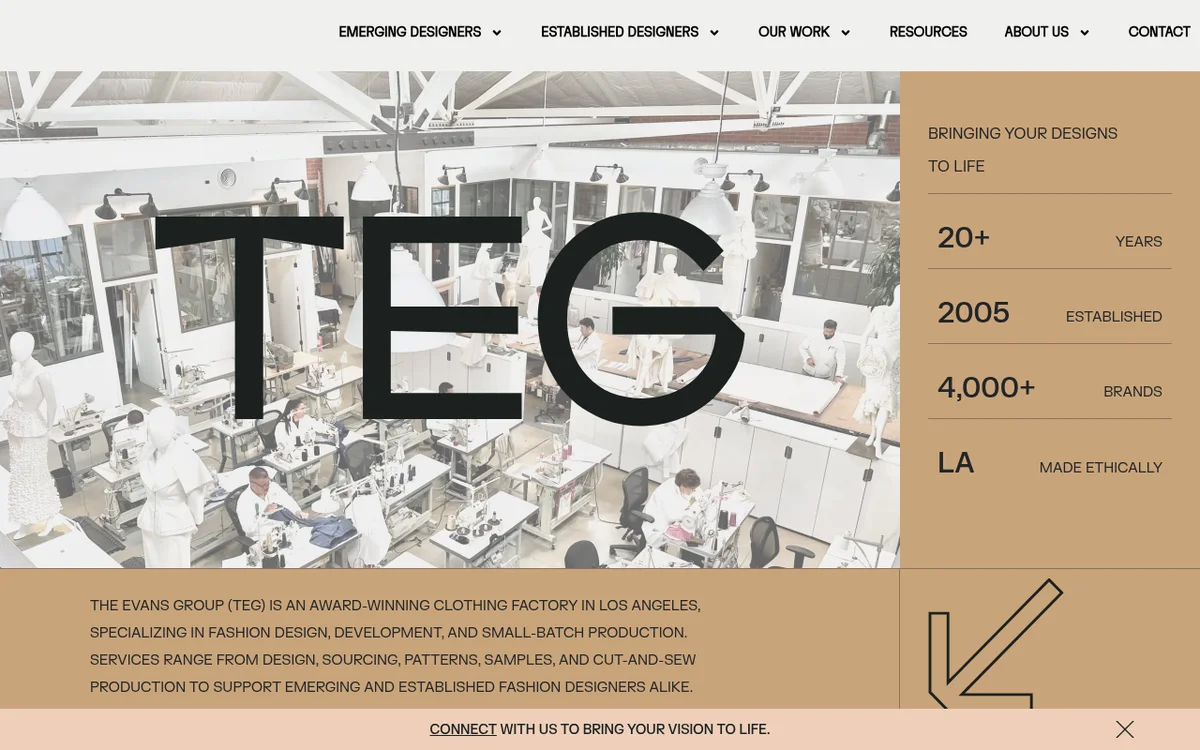
TEG is a vertically integrated apparel development and manufacturing company in the Arts District of downtown Los Angeles, offering design, sourcing, pattern making, sample development, and cut-and-sew production through one operation since 2005.
– MOQ: Studio-level production starts at 10 pieces per style; factory-level begins at 50 pieces per style – Development timeline: Packages for 2 to 15 styles, with master patternmakers and dedicated sewing teams; typical timeline is 2 to 6 weeks – Best for: Founders who need technical guidance turning a concept into production-ready garments, and established brands with demanding construction or material requirements
TEG has developed nearly 4,000 designer brands, with published work connected to Rodarte, Jonathan Simkhai, Guess, Nike, and Banana Republic. Standard domestic production runs 4 to 8 weeks, with rush options available for qualifying projects. In-process checkpoints run throughout the build, plus a third-party final inspection takes place before delivery.
Essentials Made
Essentials Made is a Los Angeles, based manufacturer specializing in custom 100% cotton, garment-dyed essentials and elevated loungewear, built for DTC brands and independent labels that want a presale-friendly production model.
– MOQ: Production runs start at 72 pieces per style – Development timeline: Samples ready in approximately two weeks; production finishes in 4 to 5 weeks – Best for: Brands focused on cotton garments (hoodies, sweatsets, tees, and activewear) who want garment dyeing in any Pantone TCX color with an enzyme or silicone wash finish
Pattern and sample development starts at $800, and first production runs start at $7,250 for a capsule of 72 pieces per style. Essentials Made works exclusively in 100% cotton using garment-dyed finishes; brands needing performance fabrics, wovens, or non-cotton construction will need a different partner.
Bella + Canvas
Bella + Canvas is a Beverly Hills, headquartered wholesale blank-apparel manufacturer, founded in 1992, primarily serving decorators, promotional distributors, and brands that customize pre-made garments rather than building from scratch.
– MOQ: No minimum order quantities for domestic shipments; orders over $200 ship free – Development timeline: Processing typically takes 1 to 2 business days – Best for: Brands that need blank garments to decorate via screen print, embroidery, or DTG, not custom cut-and-sew construction
Worth knowing: Garments are designed, dyed, and cut in Los Angeles with solar-powered, paperless warehouses; dye machines use roughly seven times less water than the industry average. Bella + Canvas completed its acquisition by SanMar Corporation in June 2026 and continues to operate as an independent brand, with SanMar serving as its exclusive national wholesale distributor. Brands that need original pattern development and custom construction will find it isn’t set up for that work.
Full Speed 100
Full Speed 100 is a full-service custom cut-and-sew manufacturer in Downtown Los Angeles offering pattern making, sample making, grading, marking, and a private label wholesale program alongside fabric sourcing from a database of over 100 suppliers.
– MOQ: Low minimum order quantities; quotes available within 24 hours – Development timeline: Rush and same-day orders available for select applications – Best for: Designer brands, sports teams, schools, and corporate clients needing a wide range of categories (basics, sportswear, suiting, swimwear, uniforms, and bags)
Worth knowing: Services include cut and sew, screen print, DTG, sublimation, embroidery, heat transfers, trim and finishing, packing and shipping. Publicly available information doesn’t include detailed pricing models or case study results, so brands should request a direct quote to assess fit.
How to find a producer for clothing
Start with minimum order quantities, because they’ll cut the list quickly. A factory with a 500-unit-per-style floor isn’t a limited-run partner, no matter what its website claims. From there, ask about sample timelines and whether patternmaking happens in-house or gets subcontracted out. In-house typically means faster back-and-forth and tighter inspection standards. Pay attention to fabric sourcing too: some manufacturers only work with specific materials, and a mismatch there kills the conversation before pricing ever comes up.
References from brands at a similar stage are worth asking for. A factory that’s comfortable with small emerging brands handles the back-and-forth of early development differently than one that prefers seasoned buyers.
Bottom Line
Clothing production companies for limited-run collections differ quite a bit in what they’re actually built to handle. Some focus on blank-garment decoration; others run full cut-and-sew development from concept straight through to delivery. The right match depends on how much construction work your pieces require, what materials you’re working with, your volume, and how much development support your brand needs before a single unit goes into production.