


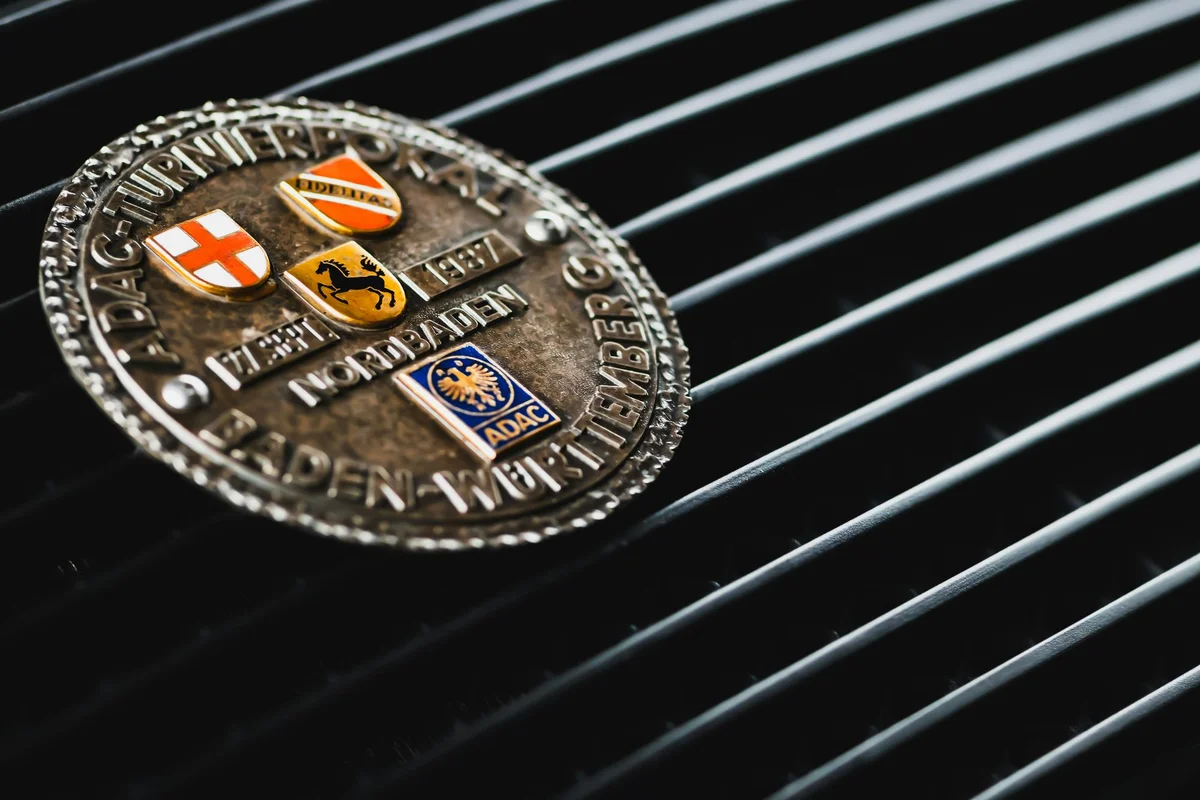
Every serious club has a door policy, a dress code and a few private jokes. Very few have an object members can actually carry. A custom coin, struck in metal and handed over in person, does that job quietly. It sits in a pocket or on a desk long after the wristband has been cut off.
The format comes from military units, but the people who make these coins now work well beyond them. Specialist firms such as challengecoins4less design and manufacture custom coins for military units, police and fire departments, corporations and organizations of all sizes. A members’ club, a film crew or a touring band fits neatly into that last group.
A Club Coin Is a Membership Token
A challenge coin is, at heart, a membership token. It carries a group’s emblem and proves the holder belongs. The best-known origin story places the first ones in a First World War flying unit, though nobody has ever proved it. What survives is the custom: members carry the coin, and a “coin check” asks them to produce it on the spot.
That logic suits private clubs surprisingly well. Membership is about access that money alone does not settle. Even at a secretive Soho club, where entry cost £30 and phones were sealed at the door when DDW visited in March, the real currency is being there.
A coin does three things a card or an app cannot:
- It has weight, so it is noticed every time a hand goes into a pocket.
- It can be passed in a handshake, which turns a gift into a small ceremony.
- It survives phone upgrades, closed venues and changes of committee.
A Coin Is Struck Between Two Dies
The Royal Australian Mint publishes its minting process step by step. Custom makers work at a far smaller scale, but the core idea of a design pressed into metal by a pair of dies is the same. The Mint’s sequence runs like this:
- A design brief, then a three-dimensional model sculpted in plaster or in 3D software.
- A reduction punch, cut into tool steel by a computer-controlled engraving machine, which takes up to 24 hours.
- Hobbing, where 100 to 400 tonnes of pressure transfer the design into a softened steel block to make the master die.
- Blanks cut from sheet metal, usually round, although Australia’s 50 cent coin is a 12-sided dodecagon.
- Coining, where dies strike both sides at once with up to 200 tonnes of pressure, at up to 650 pieces a minute.
Collector pieces get slower treatment. The Mint’s proof presses strike with 180 to 360 tonnes of pressure, and each blank is struck four to six times. A proof die strikes roughly 250 coins before it has to be replaced. That is the gap between a token and an heirloom: more pressure, more passes and fewer pieces from each die.
From the Hammer to 850 Coins a Minute
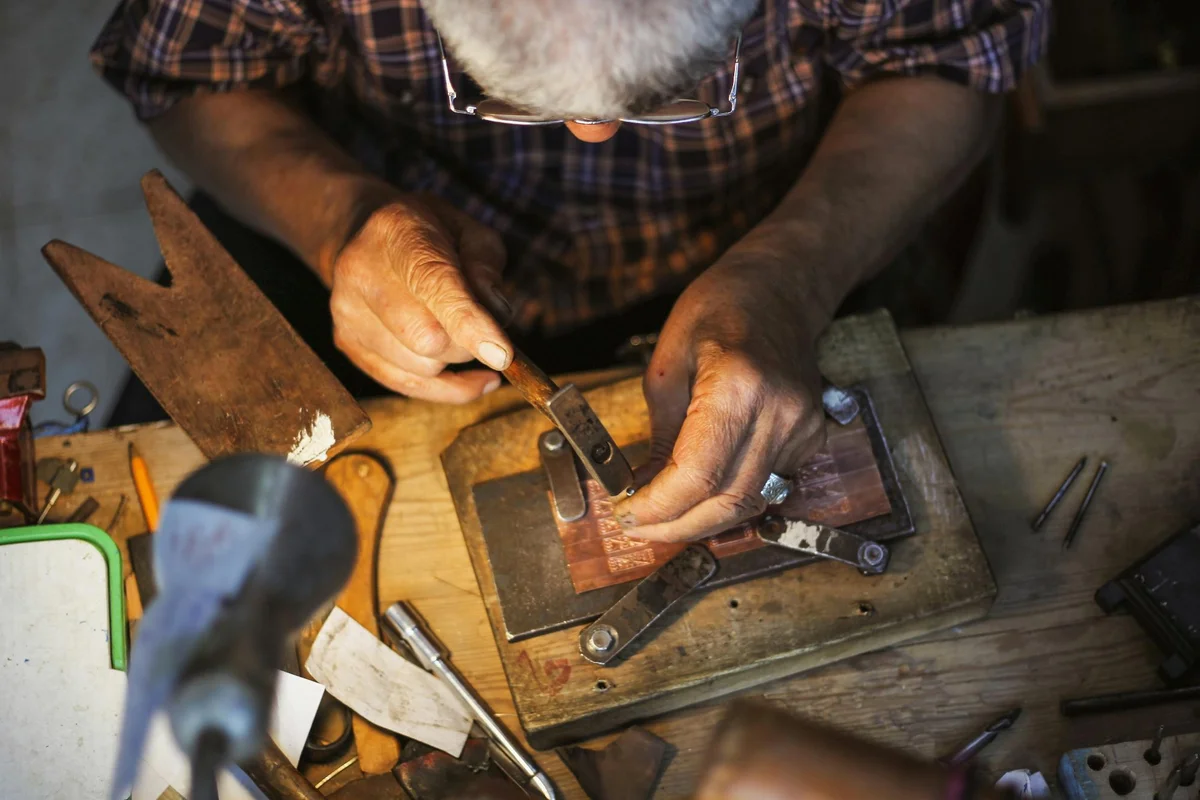
The Royal Mint’s history is a useful reminder that speed and craft have always pulled in different directions. By around 1279 the Mint sat within the Tower of London. Coins were struck by hand, with a hammer driving the upper die onto a blank.
Mechanisation arrived in the early 1660s, when a simple screw press struck one blank every two seconds. In 1810 the Mint moved to Tower Hill, where eight steam presses each struck about 60 coins a minute. Since 1968 it has worked from a purpose-built site in Llantrisant, South Wales.
A modern press there can strike up to 850 coins a minute, at a pressure of around 60 tonnes. A club order of a few hundred pieces belongs to a different world. In spirit it sits closer to the hammer than the production line: small, considered and made to be kept.
Each Finish Suits a Different Crowd
Finish says more about a club than the logo does. The table below pairs common options for custom coins with the rooms they tend to suit.
| Choice | What it does | Tends to suit |
|---|---|---|
| Polished gold | High gloss that catches the light | Black-tie dinners and anniversaries |
| Antique silver | Muted luster with a worn edge | Older institutions and heritage clubs |
| Black nickel | Dark metal with a soft shimmer | Music, fashion and late-night venues |
| Rope or reeded edge | A textured rim with a classic feel | Formal or nautical themes |
| Colored enamel | Color set into recessed areas | Emblems that depend on color |
| Plain die-struck metal | The metal and relief alone | Minimal, monochrome identities |
Beyond finish, the options sold for custom coins include cut-outs, unusual shapes, engraved edge text and sequential numbering. Numbering matters more than it sounds. A coin marked 17 of 150 stops being merchandise and becomes an edition. Watchmakers such as Patek Philippe treat rare handcrafts like engraving and enamel as art forms in their own right. A good coin borrows a little of that thinking.
A Good Brief Starts With the Story
The brief decides whether a coin ends up on a desk or in a drawer. A few habits help:
- Start with the story, not the logo: a date, a place or a line only members will recognize.
- Fix the edition size before the design, so numbering and budget agree.
- Ask for a digital proof and approve it in writing before anything is struck.
- Choose a finish that matches the club’s rooms rather than its website.
- Plan the handover, because a coin passed in a handshake carries more than one left on a seat.
- Keep a simple register of who holds which number.
The Object That Stays
Clubs spend heavily on rooms, music and guest lists, and most of it disappears by morning. A coin is the rare piece of membership that stays. Get the story, the finish and the edition right, and the object will do the remembering for everyone who holds one.
Frequently Asked Questions
A Coin Is Carried, a Medal Is Worn
A coin is usually carried and exchanged, often in a handshake. A medal is usually worn or displayed, and it tends to mark one achievement rather than membership.
Edition Size Starts From the Membership
Start from the people who will hold one, then add a small reserve for new members. Numbering an edition works best when the total is fixed from the start.
Both Sides of a Coin Can Carry Color
Yes. Enamel color can be added to one side or both, while the plain die-struck style shows the metal alone. Ask the maker how extra colors affect the price.
Proof Coins Are Struck Several Times
Proof blanks are struck several times under higher pressure. The Royal Australian Mint strikes its proof coins four to six times each, which lifts fine detail and leaves a cleaner surface.