


A sharp look at Salone del Mobile 2026, where collectible design, material intelligence, and hospitality reshape Milan’s most influential furniture fair.
Banner image courtesy of AD Middle East
There are certain rituals in the design calendar that function like annual pilgrimages, requiring an almost religious-like attendance by the design world’s greatest. Art Basel. Venice Biennale. The annual, slightly frantic exodus of editors, architects, dealers, and the professionally well-dressed into Milan each April. And then there is Salone del Mobile, which, by 2026, has perfected the art of appearing both immovable and perpetually on the verge of reinvention.
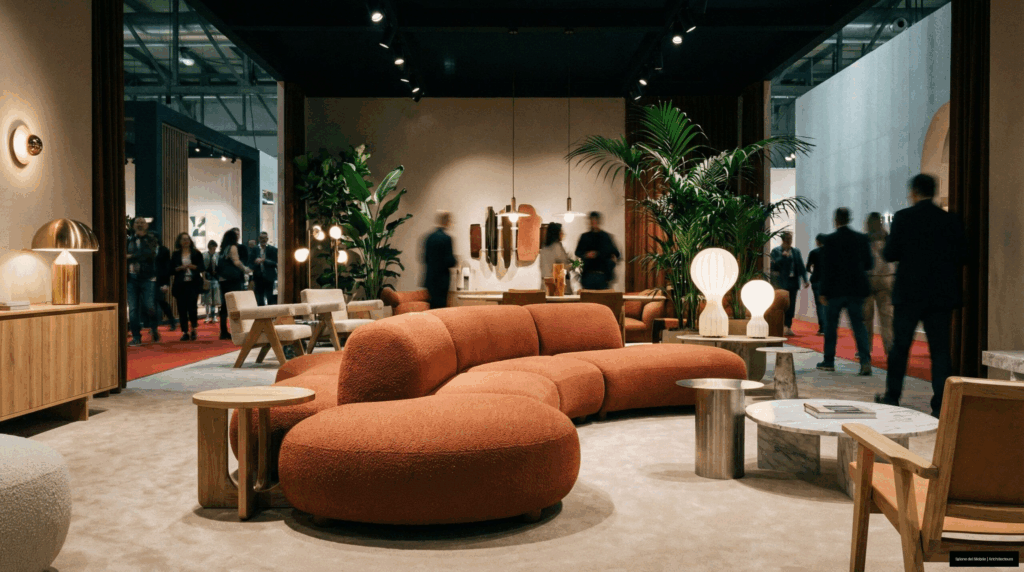
From 21 to 26 April, the fair returns—again—to its vast, slightly disorienting home at Fiera Milano Rho. The setting remains the same: hangars of polished ambition, escalators carrying linen-clad pilgrims between halls, the low hum of deal-making disguised as conversation. But if Salone has always been a benchmark, this year it feels more like a testing ground of not just taste, but of where the entire idea of “luxury design” is heading when the market grows more cautious, more selective, and infinitely more interested in what things are made of.
Because Salone, despite its trade fair label, has long since escaped the confines of commerce. It is a stage set where furniture becomes a proxy for power, and where hospitality blurs into cultural production. In 2026, that dynamic sharpens. The fair introduces new curatorial platforms, new conceptual frameworks, and just enough structural change to suggest that something deeper is shifting beneath the polished surfaces.
A Fair Born in the Age of Confidence
To understand the particular self-assurance of Salone, one has to return, briefly, to its origins. The fair began in 1961, in a Milan still buoyed by postwar optimism and the peculiar alchemy of Italian industry meeting design intelligence. Its purpose was straightforward enough: promote Italian furniture and expand exports. A national showcase, essentially, with just over 300 exhibitors and somewhere between 10,000 and 12,000 visitors—depending on which version of history one prefers to believe.
It is tempting, in retrospect, to read that first edition as modest. It was not. It was, in fact, perfectly calibrated to its moment: a country emerging from reconstruction, armed with a manufacturing base and an instinct for form that would soon become synonymous with modern design itself.
What followed was less a steady accretion. Furniture begat kitchens. Kitchens invited bathrooms. Lighting arrived, inevitably, and with it a more atmospheric understanding of interiors. By the time satellite exhibitions and city-wide programming began to orbit the fair, Milan itself had transformed into a temporary capital—one that, for a week each year, dictated the visual language of interiors from all around the globe.
2026: From Product to Infrastructure
The 64th edition of Salone del Mobile does not announce itself with theatrical disruption. Instead, it expands across more than 169,000 square metres, hosting over 1,900 exhibitors from 32 countries.
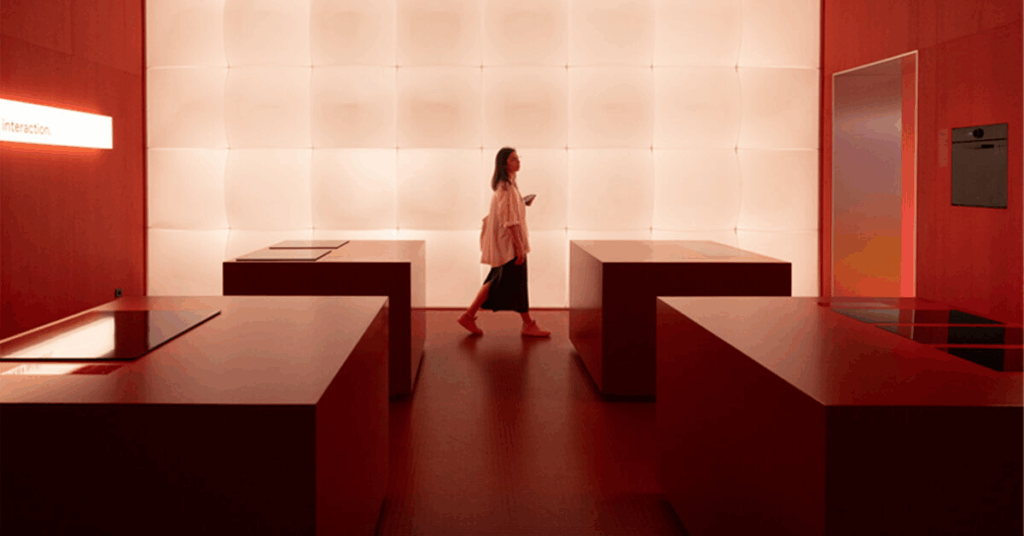
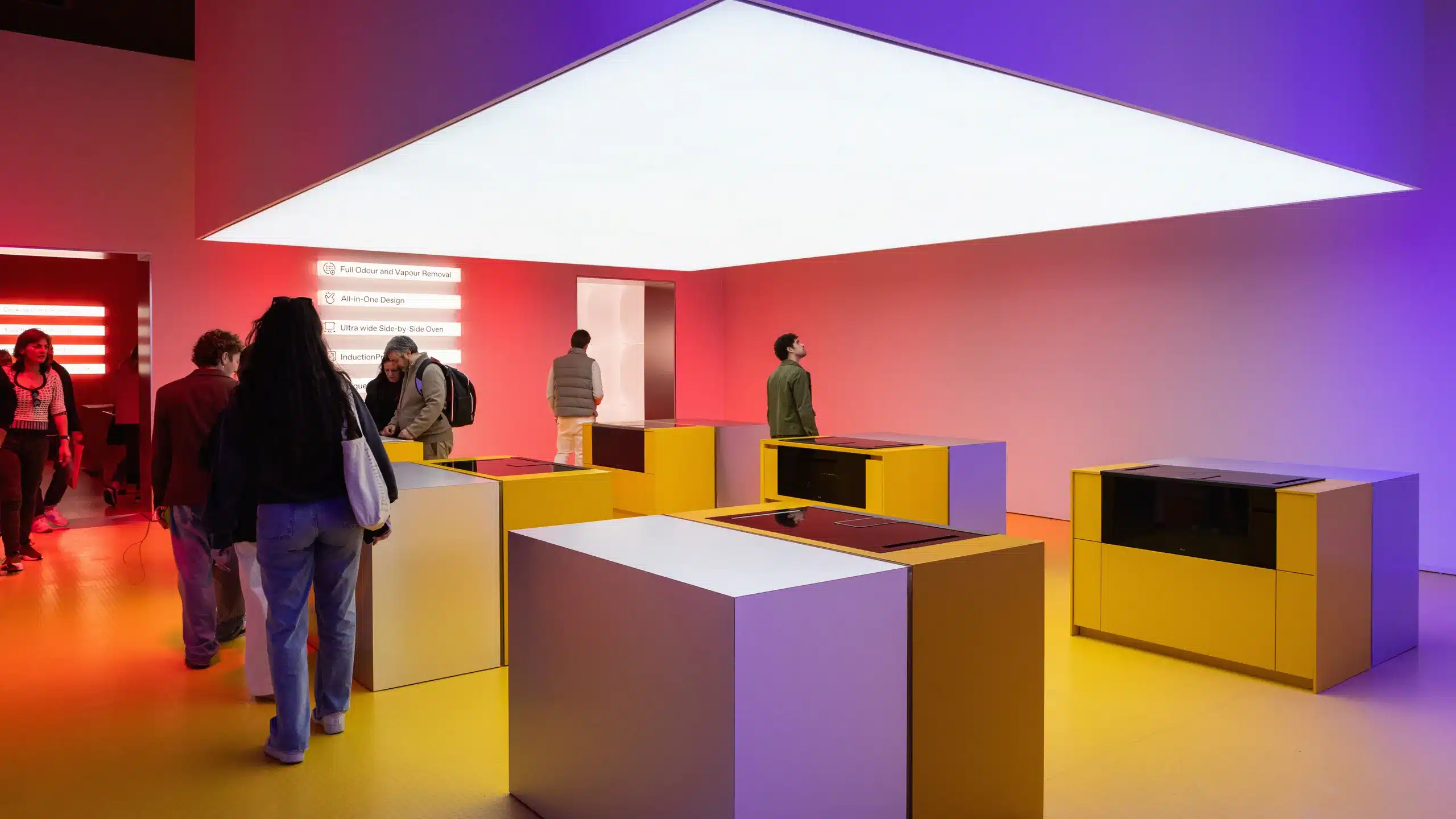
Some things return, as they should. EuroCucina reappears, bringing with it the theatre of high-end domestic choreography. FTK – Technology For the Kitchen follows. The International Bathroom Exhibition continues too.
But the real intrigue lies elsewhere.
This year introduces Salone Raritas, a new platform occupying Halls 9 to 11, dedicated to collectible design in its broadest, and most unapologetically rarefied, sense. Icons sit beside limited editions, antiques converse with contemporary pieces, and craftsmanship—actual, laborious, time-intensive craftsmanship—reasserts itself as both currency and narrative. It is not difficult to see what is happening here. The fair is acknowledging, quite openly, that the future of luxury is not volume, but distinction.
The exhibition design, conceived by Formafantasma, avoids the trap of reverence. Instead, it stages objects in a way that feels forensic, inviting scrutiny rather than admiration. One is encouraged to look closely—to consider joinery, surface, provenance. It is less a display than a proposition: that design, at its highest level, is no longer about novelty, but about depth.
Nearby, Aurea, an Architectural Fiction unfolds as an installation that refuses easy categorisation. It threads together innovation and tradition with a certain narrative ambiguity. If Salone once excelled at presenting answers, 2026 seems more interested in asking questions.
Then there is Salone Contract, a longer-term initiative led by Rem Koolhaas and David Gianotten of OMA, which gestures towards an even broader recalibration. Focused on hospitality, commercial interiors, and large-scale projects, it signals an understanding that design is increasingly negotiated in complex, multi-layered environments. Its full launch is slated for 2027.
Threaded through all of this is a renewed emphasis on sustainability and circular design as operational necessity. Materials are scrutinised, and processes are interrogated. Even the visitor experience has been reworked, with improved wayfinding and a subtle reorganisation of circulation.
If there is a single phrase that captures the shift, it is this: Salone is a place where objects are only one part of a much larger conversation about how environments are conceived, produced, and ultimately inhabited.
The Authors of the Moment
One of the more telling aspects of the 2026 edition is the absence of a singular, dominant “star.” There is no Philippe Starck figure looming over proceedings, no single narrative to orbit. Instead, influence is distributed among a network of curators, studios, and exhibitors who collectively define the tone of the fair.
At the centre of Salone Raritas is Annalisa Rosso, whose role as Editorial Director and Cultural Events Advisor is practically an orchestration. Her approach resists the obvious. Rather than assembling a greatest hits of collectible design, she constructs a dialogue—between past and present, between object and context, between value and meaning.
Formafantasma, tasked with shaping the exhibition design, operate with their characteristic restraint. Their work rarely insists on attention, but earns it through precision and a certain intellectual clarity. In the context of Raritas, this becomes particularly potent. The objects are allowed to speak, but within a framework that subtly guides interpretation.
Even the communication campaign, developed by Motel409 under the title A Matter of Salone, leans into this material intelligence. The emphasis is not on spectacle, but on substance. Surfaces, textures, and processes take precedence over form for form’s sake. It is a campaign that suggests the fair is acutely aware of its own evolution—and is choosing to lean into it.
Among exhibitors, particularly within Salone Raritas, a certain calibre of participant signals the seriousness of the shift. Nilufar brings its signature blend of historical and contemporary pieces, blurring boundaries with effortless confidence. COLLECTIONAL, Salviati in collaboration with Draga & Aurel, Mouromtsev Design Editions, Mercado Moderno, Bianco67, and Brun Fine Art each contribute to a carefully assembled archive of value.
Beyond the fairgrounds, across the city during Milan Design Week, a broader constellation of designers continues to shape the conversation. Names like Bernhard Müller, Marco Guazzini, Elizabeth Lewis, Richard Yasmine, Sara Ricciardi Studio, and atelier oï appear less as isolated talents and more as part of a shared sensibility—one that privileges material experimentation, narrative depth, and a certain resistance to the disposable.
What Salone Is Becoming
If there is a quiet tension running through Salone del Mobile 2026, it lies in the space between what the fair has been and what it is becoming. It still functions, undeniably, as a commercial platform. Orders are placed. Contracts are negotiated. Business is conducted with the usual mix of discretion and urgency.
But layered over that is something else. A growing sense that design, at this level, is no longer simply about producing objects, but about constructing meaning. About understanding materials not just as components, but as carriers of history and intention. About recognising that the environments we build (whether domestic, commercial, or cultural) are increasingly complex ecosystems rather than isolated gestures.
Salone, in its 64th iteration, seems to have accepted this.
It remains, as ever, the place to see what is new. But more importantly, it has become the place to understand what matters.