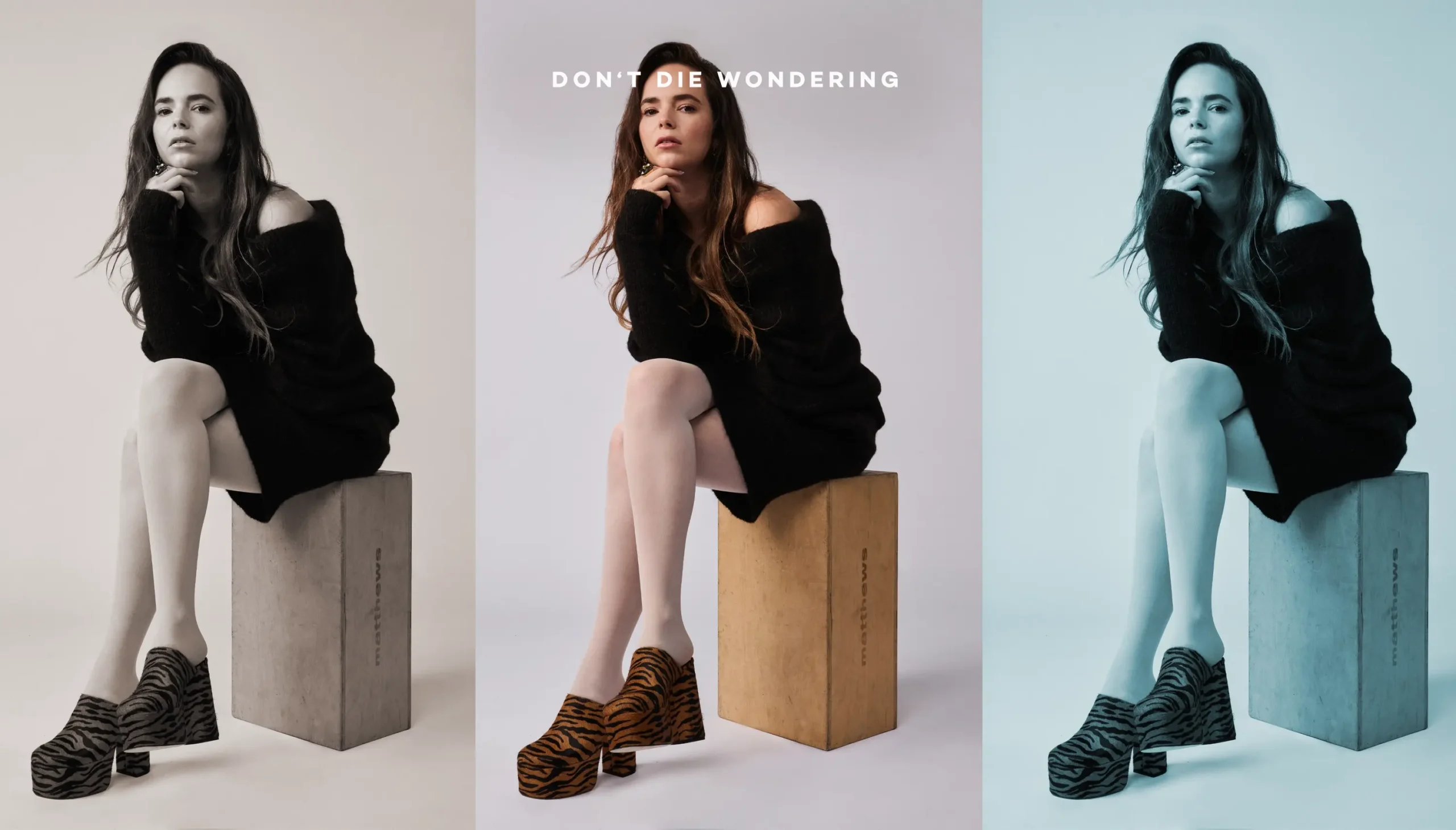
Rebecca Hanssen on stepping into Queen Meve’s power, returning to set weeks after giving birth, and the fierce duality that shaped her biggest season yet.
There’s a grounded ferocity to Rebecca Hanssen that makes her embodiment of Queen Meve feel almost inevitable. On screen, Meve is all steel and strategy, a ruler navigating the thin line between sovereignty and survival. But what gives her resonance this season is the undercurrent of vulnerability — the flicker of fear, the stubborn compassion — that Hanssen threads through the role with striking clarity.

Off camera, she was living her own version of a high-stakes balancing act, returning to The Witcher just weeks after giving birth and stepping straight into armour, horseback training, and some of the show’s most pivotal scenes. That blend of endurance, humour, and instinct shaped both her craft and her character, blurring the boundary between performer and performance in compelling ways.
We sat down with Hanssen to talk about stepping into Meve’s power, the strange harmony between new motherhood and fantasy warfare, and the honesty she refuses to compromise on — in work, in life, and in the world she’s helping bring to the screen.
1. Queen Meve really comes into her own this season — she’s fierce, strategic, and deeply human. What aspects of her evolution were most exciting (or challenging) for you to bring to life this time around?
When Meve was first introduced in Season 2, the stakes were very different. Now, her kingdom is on the brink of invasion. Leaning into that fear, determination and frustration really brought her to life for me. The duality of a fierce monarch a versus woman simply trying to protect her home was incredibly fun to explore.
2. Your final scenes with Liam Hemsworth have become the talk of the fandom. Without spoilers, what was the emotional or physical energy like filming that pivotal moment — especially knowing it sets the tone for the final season?
I really tried not to think about how pivotal a moment it was while we were filming as I think my knees would’ve buckled under the pressure. I mean, I had Liam Hemsworth kneeling at my feet and Laurence Fishburne sitting on a rock watching my every move – I basically just had to focus on being in the moment and having fun! Which wasn’t hard as there’s a lot of humour in the setup of that scene which helped to lighten the burden of importance.
3. Meve is one of the few women in the Brotherhood of rulers — cunning but also principled. Did you consciously draw on any real-world figures or personal experiences to shape her authority and moral complexity?
She definitely has the biggest balls out of the lot of them which was great fun to play. I drew a lot from personal experience, from moments where I’ve wanted to say what I really think in situations where those “in charge” were being a bit useless. I think women in particular are very skilled at putting on a polite front, “yes, of course you’re right”… while secretly knowing we’re going to do it our way anyway. Meve doesn’t bother with the façade; she just says it as it is. That honesty was very cathartic to tap into.
4. The Witcher is known for its intensity — epic battles, intricate politics, emotional stakes. Was there a moment on set this season that truly pushed you to your limit, either physically or emotionally?
I’ll be honest, the day before filming that big final scene, I’d had maybe two hours of sleep. I had a five month old baby who refused her crib and was in the middle of a rough patch of nights. My pickup was at 4am and I was up at 3 to express enough milk to tide her over for the morning. I was utterly knackered but sometimes that delirium actually helps. You’re too tired to overthink, so you just throw yourself into it. In a strange way, that exhaustion helped me tap into Meve’s exhaustion too.
5. You returned to set just two months after giving birth — straight into armour, horseback riding, and swordfights. How did you prepare yourself, both physically and mentally, to step back into such a demanding role so soon?
I think it was equal parts adrenaline and stubbornness! The production team were incredible, they constantly checked in to see where I was at and what I’d be comfortable with. Stepping back onto a set after two months in baby land was honestly magical. Don’t get me wrong, I adored immersing myself in new mum life, but I was craving that reconnection to my body, work, and sense of former self.
I didn’t start riding lessons until four months postpartum, and again, it felt amazing to feel strong and capable outside of sleepless nights, breastfeeding, and endless laundry. My secret motto through it all was the “three C’s” – carbs, coffee, and concealer. They carried me through.
6. What was your mindset like in those early weeks — juggling newborn life with the scale and chaos of a fantasy production? Did it feel surreal, or did work actually provide a sense of grounding and normalcy?
Definitely the latter. As any parent will tell you, those first few months can blur into one. It’s a glorious little bubble, but it can also feel stifling. Having this literal alternate fantasy world to dip my toe into each week, whether for a scene, a makeup test, or a riding lesson, gave me a strange sense of grounding. It reminded me that I was still me outside of motherhood.
Of course, there were days when the juggle felt overwhelming but I’m incredibly lucky to have a hands-on husband who’s thrown himself headfirst into fatherhood, and an amazing network of family and friends. It truly does take a village.
7. You’ve spoken about how supportive the production team was. What specific accommodations made the biggest difference for you — and what do you wish more workplaces, on set or in offices, understood about mothers returning to work?
The biggest gift was understanding. I never once felt like an inconvenience. Me nipping off to my tent between takes to express milk was just accepted and built into the schedule. After giving birth, Sophie Holland’s wonderful casting team kept checking in to see how I was feeling and I know they would have made provisions had my recovery been more complicated.
What I wish more workplaces understood is that supporting mothers isn’t about lowering expectations; it’s about enabling them to meet them sustainably. When women are supported, they thrive, and so does the work.
8. There’s something almost cinematic about it — a Queen leading armies while breastfeeding off-camera. Did that duality influence how you approached Meve’s strength, vulnerability, or leadership?
Absolutely. There’s something profoundly humbling about motherhood, it strips away ego. Plus the actual act of birthing?! I don’t think I’ve ever felt more badass whilst also completely out of control and broken. This duality definitely deepened my understanding of Meve’s strength. Her power doesn’t come from dominance; it comes from endurance, empathy, and the ability to keep going when no one else can. That blend of warrior and nurturer became my foundation for Meve this season. She may not have children in the show, but she’s very much a mother bear fiercely protecting her people.
9. Motherhood can shift a person’s relationship with their body, their time, and even their creativity. Have you noticed any change in the way you relate to your craft since becoming a mother?
Completely. I have less time to overthink, which means I trust my instincts more. My priorities have also shifted which is liberating as I don’t put as much pressure on myself. It’s easy to become over critical in this industry but having my daughter has taught me to be kinder to myself. Ultimately I love my job and I relish my time working, but I now want to be able to set it aside once I walk in my front door so I can be fully focused on her. That separation has actually made me more creative and more grounded in the work itself.
10. You’ve described feeling passionate about advocating for mothers returning to work. What conversations or changes do you hope to see within the industry when it comes to supporting women through pregnancy and early motherhood?
While I’m passionate about championing mothers returning to work, I also want to celebrate the incredible women who choose to take a few years off to focus entirely on their children. They are powerhouses too, and deserve equal acknowledgment.
In terms of changes in the industry, I’d love to see childcare considered part of standard production planning, not an afterthought. I’d love to see more roles written for women in this stage of life, without it being their defining trait. And mostly, I hope the conversation shifts from “How do we make this work for mothers?” to “How can we make this industry more human for everyone?”