
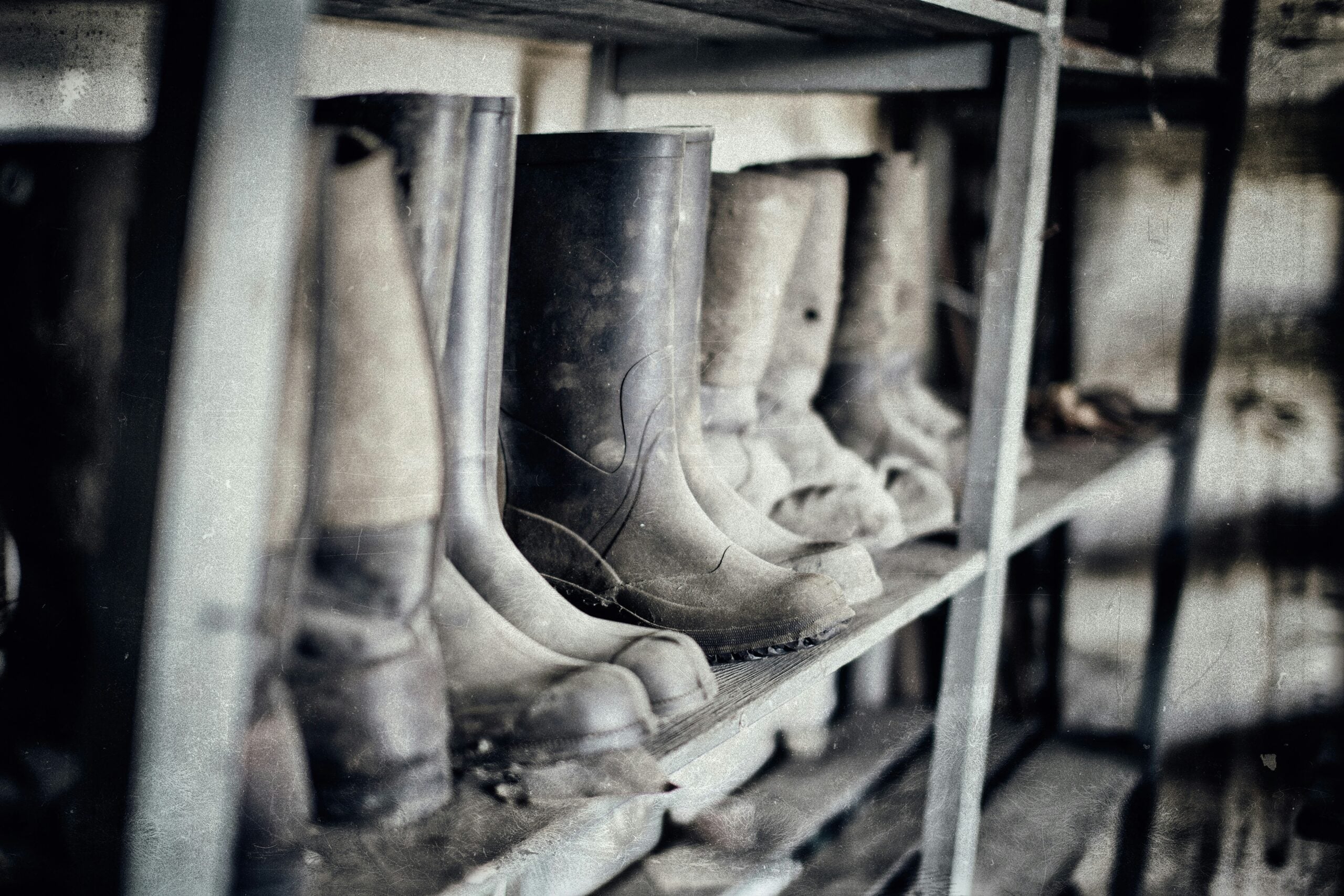
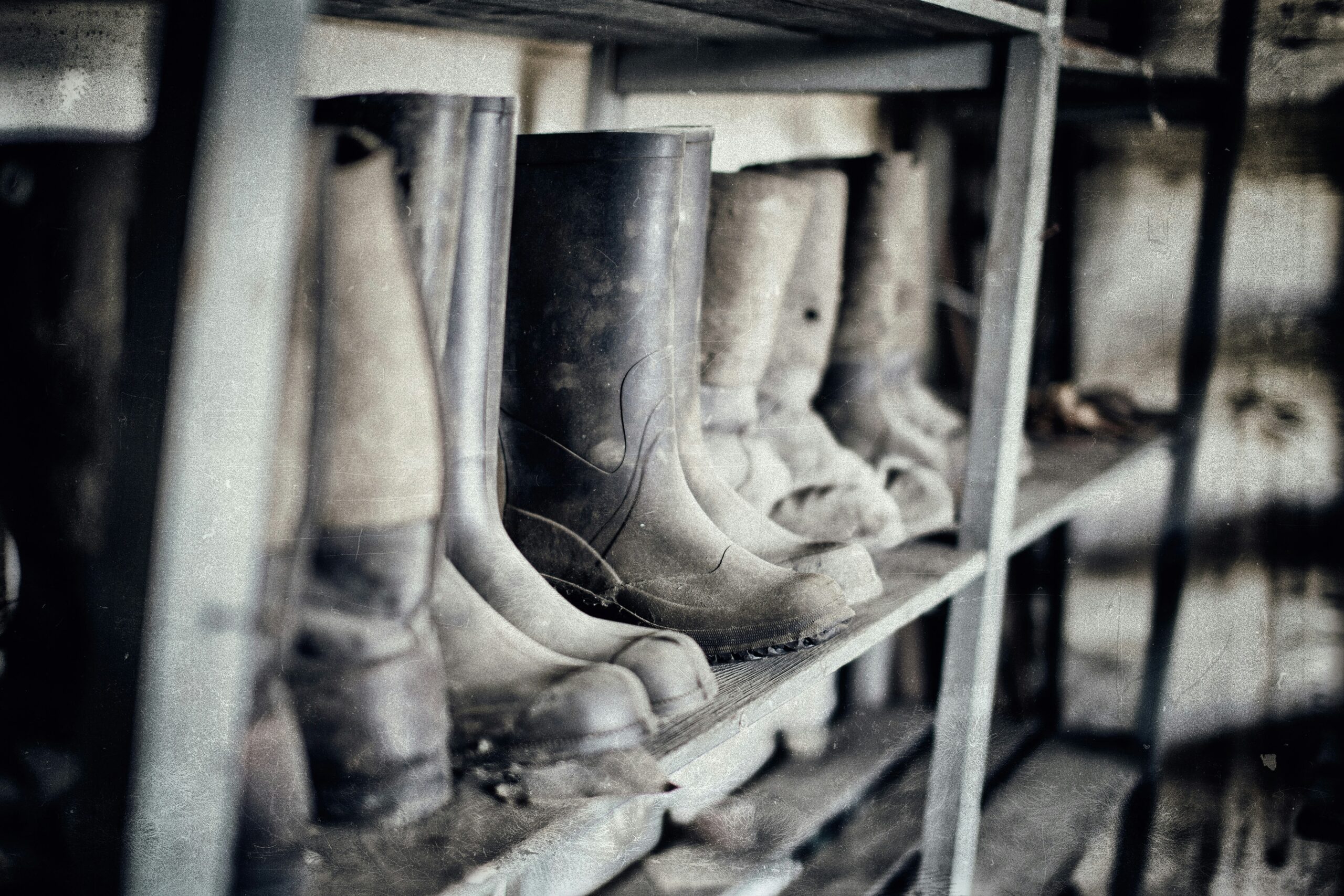
Banner image courtesy of Denny Muller
Picking the right safety boots can feel like a major decision. You spend most of your day on your feet, and the wrong pair can easily ruin your week. This choice is about more than just preventing a serious accident; it’s about making it through your shift without sore and aching feet.
You need work boots that perform as hard as you do. Understanding how to choose safety boots means you can step onto any job site with total confidence. Let’s walk through the process to find you the perfect pair.
What Does Your Job Throw at You?
Before you even begin to shop work boots, you must analyze your work environment. What are the actual, everyday risks you face? This initial assessment is the most critical step in the entire process.
Consider the surfaces you walk on and the tasks you perform daily. Are there heavy objects that could potentially fall or roll onto your feet? Your job might expose you to sharp materials like nails, broken glass, or metal shavings that require puncture resistance.
Some jobs involve walking on slick, oily, or wet floors throughout the day. Others might expose you to water, harsh chemicals, or the risk of direct contact with an electrical hazard. A clear understanding of these daily challenges will guide you to the correct and most safe work boots.
Boots for Different Jobs
Every occupation has its own set of demands, and your footwear should reflect that. The needs of construction workers are vastly different from those working in a warehouse or on a farm. Let’s look at some common examples.
For construction or other heavy industries, you need maximum protection. Prioritize a strong safety toe, a sole that provides puncture resistance, and a deep tread pattern for excellent grip on uneven surfaces. High-quality waterproof work boots are almost always a smart investment in these set hi tings.
In a manufacturing or warehouse environment, you may need boots with anti-static properties. Puncture and slip protection remain important, especially on smooth concrete floors. Many work boots offer excellent ankle support, which can prevent a painful sprain during a long shift.
If you work in a warehouse, you are constantly on the move. You’ll want a lightweight option with superior slip resistance. A toe work boot that absorbs shock will also protect your joints from the repetitive impact of walking on concrete.
Working outdoors in agriculture requires fully waterproof work. You will also want boots with aggressive tread patterns for solid traction in mud and on wet grass. Make sure the boots are durable enough to handle anything the weather and environment present.
Cracking the Safety Code on the Label
You have likely noticed the string of letters and numbers on a boot’s tongue and felt a bit lost. It can look like a secret code, but it is actually a straightforward system. This code tells you exactly what protective features the safety shoe contains.
The primary standard to look for is EN ISO 20345. It is a set of regulations that all safety footwear must pass to be sold in Europe and many other parts of the world. Think of it as a certified guarantee that the toe boot can handle specific, tested dangers.
The American equivalent is the ASTM F2413 standard. Both systems test for similar threats like impact and compression resistance for the safety toe, puncture resistance for the sole, and protection from an electrical hazard. Finding a pair that meets the standard for your region is non-negotiable for safe work.
Understanding the S-Ratings
The European standard uses S-ratings to classify different levels of protection. Each rating builds upon the previous one by adding more protective features. Here is a simple breakdown of what these codes mean for your safety.
SB, or Safety Basic, is the minimum level. It indicates that the boot has a protective toe cap tested to 200 joules of impact. Any footwear labeled as a “safety boot” must meet at least this standard.
S1 boots include the protective toe cap, plus anti-static properties and a fully enclosed, energy-absorbing heel. This heel design helps reduce fatigue from walking on hard surfaces like concrete. These are common in logistics and indoor industrial work where there’s no risk of punctures from below.
S3 boots are a very popular choice for a wide range of professions, including construction workers. They contain all the features of an S1 boot but add a puncture-resistant midsole and a cleated, slip-resistant outsole. This rating is built for demanding work sites where multiple hazards are present.
Below is a table that helps visualize the different protection levels. Understanding these can help when you shop steel toe or composite toe options.
| Rating | Toe Cap | Anti-Static | Heel Energy Absorption | Puncture Resistance | Water Resistance |
| SB | Yes | No | No | No | No |
| S1 | Yes | Yes | Yes | No | No |
| S2 | Yes | Yes | Yes | No | Yes |
| S3 | Yes | Yes | Yes | Yes | Yes |
| S6 | Yes | Yes | Yes | No | Full (WR) |
| S7 | Yes | Yes | Yes | Yes | Full (WR) |
There are also S4 and S5 boots, which are typically fully molded polymer or rubber boots, like wellington work boots. S6 and S7 are newer classifications. They add complete water resistance (WR) to the existing features of S2 and S3 boots, making them ideal for those working outdoors constantly.
The Features That Really Matter
Beyond the official safety codes, several key features distinguish an adequate safety toe boot from an excellent one. These are the construction details that impact your daily safety and comfort levels. Getting these details right will dramatically improve your workday experience.
Do not just purchase the first pair of safety shoes you find that meets your site’s minimum rating. Consider how the boot is constructed from the sole up. You will be wearing these boots for forty hours a week or more, so every detail counts.
Toe Caps: Not Just About Steel Anymore
The protective toe cap is the most recognizable feature of any safety footwear. For many years, steel toe caps were the industry standard. Steel offers incredible protection from both impact and compression forces.
However, traditional steel toe boots can be heavy and will conduct heat and cold. This is why the composite toe boot has gained so much popularity. Composite toe caps are made from non-metal materials like Kevlar, carbon fiber, fiberglass, or plastic.
This toe type provides similar protection to steel but without the added weight. Composite materials are also ideal for anyone who regularly passes through metal detectors. For many jobs that don’t involve extreme impact risk, a composite safety toe is the more comfortable and practical choice.
Soles: Your Connection to the Ground
The sole of your work boot does much more than simply touch the floor. It is a complex system that protects you from sharp objects and prevents you from slipping. This part of the boot is a critical safety component.
A puncture resistant midsole is located between the insole and the outsole. It is designed to stop nails, screws, and other sharp objects from piercing through to your foot. This is an essential feature for demolition, waste management, and construction work.
A slip-resistant work sole is also vital. The Centers for Disease Control notes that slips, trips, and falls are among the leading causes of workplace injuries. A boot with a high-traction, common outsole material like rubber can prevent a serious accident.
How to Choose Safety Boots For All Day Comfort
While protection is the number one priority, comfort is a very close second. If your boots are painful to wear, you will be distracted and miserable all day. An uncomfortable safety boot can even be a hazard itself, as it takes your focus away from your work.
Finding a boot that is both protective and comfortable is achievable. The most protective boot in the world becomes useless if it is so uncomfortable that you avoid wearing it. You don’t have to sacrifice one for the other.
The overall fit is the foundation of comfort. A properly fitted safety toe boot should allow you to wiggle your toes freely. However, your heel should feel secure and not slip up and down as you walk.
Finding the Perfect Fit
Always try on new work boots at the end of the day, as your feet naturally swell. Be sure to wear the same type of socks you normally wear for work. This method provides the most accurate feel for how the boots will fit during a long shift.
Don’t hesitate to replace the manufacturer’s insole with an aftermarket one. The insoles included with many boots are often thin and offer minimal support. A quality cushioned insole that matches your arch type can make a world of difference for a comfortable safety toe experience.
Finally, always allow for a break-in period. Wear your new toe work boots around the house for several hours at a time before taking them to the job site. This process lets the materials, especially in leather work boots, soften and conform to the unique shape of your foot.
The Right Material for the Job
The materials used to construct your safety boots affect their durability, breathability, and water resistance. Choosing the right material for your specific work environment is a major part of the selection process. Different materials offer different benefits.
Leather has long been the classic material choice for high-quality outdoor boots and for good reason. It is incredibly durable, flexible, and can be treated to be highly water-resistant. Over time, it molds to your foot, providing a custom-like fit.
Full-grain leather work boots are considered the premium option. This material is the most durable and breathable type of leather. It does require some occasional care, such as cleaning and conditioning, to maintain its performance and extend its life.
Modern Material Choices
Rubber or polymer boots are completely waterproof. They are the standard choice for extremely wet conditions or for working with certain chemicals and are often found in slip-on wellington work styles. Their primary disadvantage is a total lack of breathability, which can lead to sweaty feet.
Synthetic materials have become very common in modern safety footwear. These include advanced textiles like nylon mesh, microfiber, and Cordura. Manufacturers use these materials to make boots lighter, more breathable, and often more affordable than their leather work counterparts.
Many of the best safety boots feature a combination of materials. For example, a boot might use a leather frame for structure and durability while incorporating mesh panels for improved airflow. This hybrid approach often provides an excellent balance of toughness and comfort.
Final Details to Consider
You have assessed your job’s hazards, decoded the safety ratings, and know which features and materials you prefer. There are just a few last elements to consider before you make your final decision. These details can influence both the function and convenience of your footwear.
First, decide between lace-up and slip-on styles. Lace-up boots offer a more secure and customizable fit, which is great for ankle support. Slip-on styles, like some western boots, are convenient and quick, which is ideal if you frequently take your boots on and off.
Insulated boots are another consideration for those who are working outdoors in cold climates. Look for boots with a Thinsulate rating to help keep your feet warm. Good insulation is critical for both comfort and safety in freezing temperatures.
And of course, there is the matter of your budget. While it can be tempting to opt for the cheapest pair available, this is often a mistake. Investing in a well-made pair of safety boots usually pays off in the long run with superior comfort, better durability, and ultimately, greater safety.
In Summary
Ultimately, a good pair of work boots is a crucial investment in your personal health and safety on the job. Taking the time to fully understand your real-world needs is what separates a good choice from a great one. You need to assess your job’s specific dangers, decode the safety standards, and find the right balance between robust protection and all-day comfort.
Make sure you select a boot that is built to last from quality materials. Following these steps on how to choose safety boots will lead you to a pair that keeps you protected and comfortable. A great pair of boots lets you focus on your work, not on your feet.