
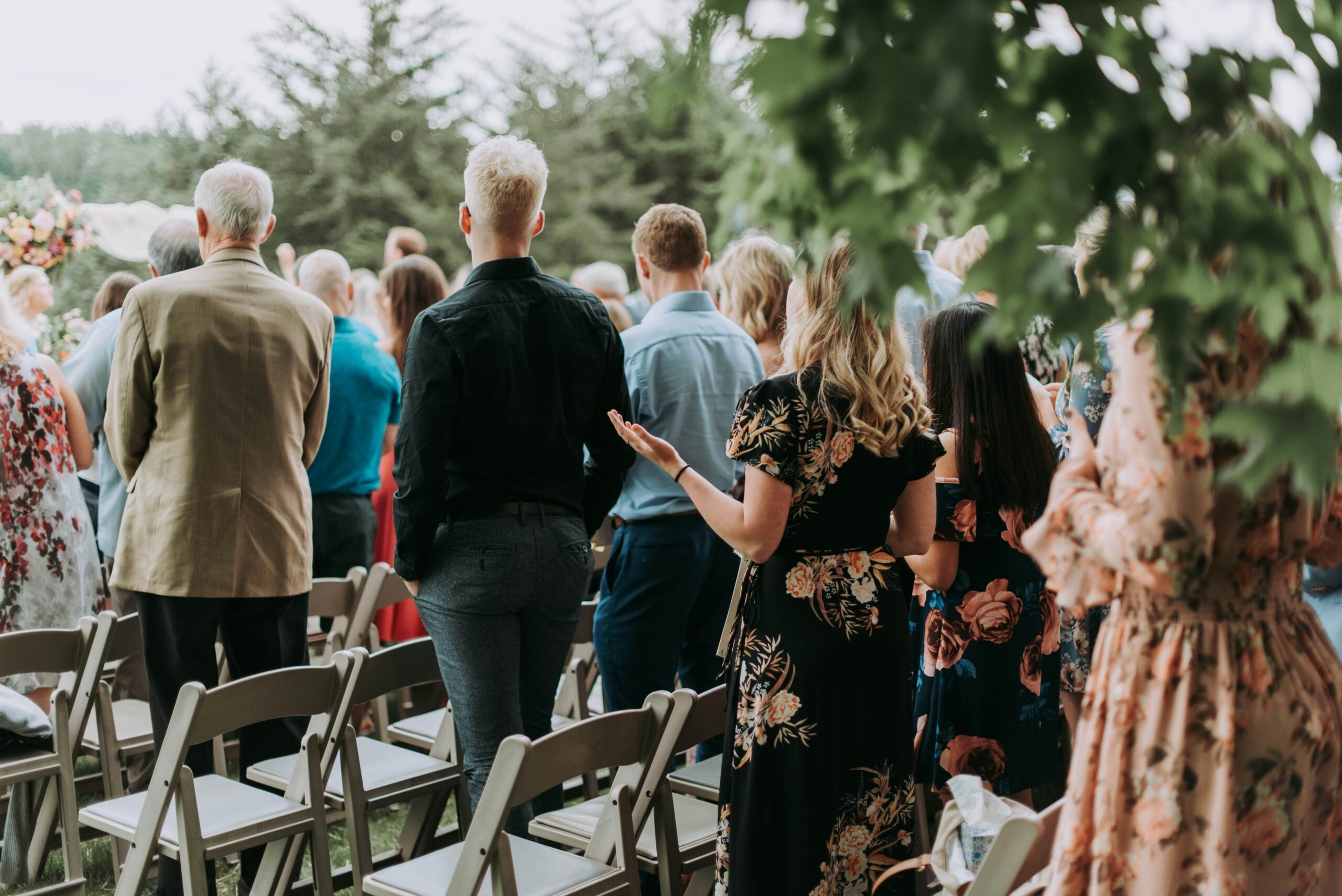
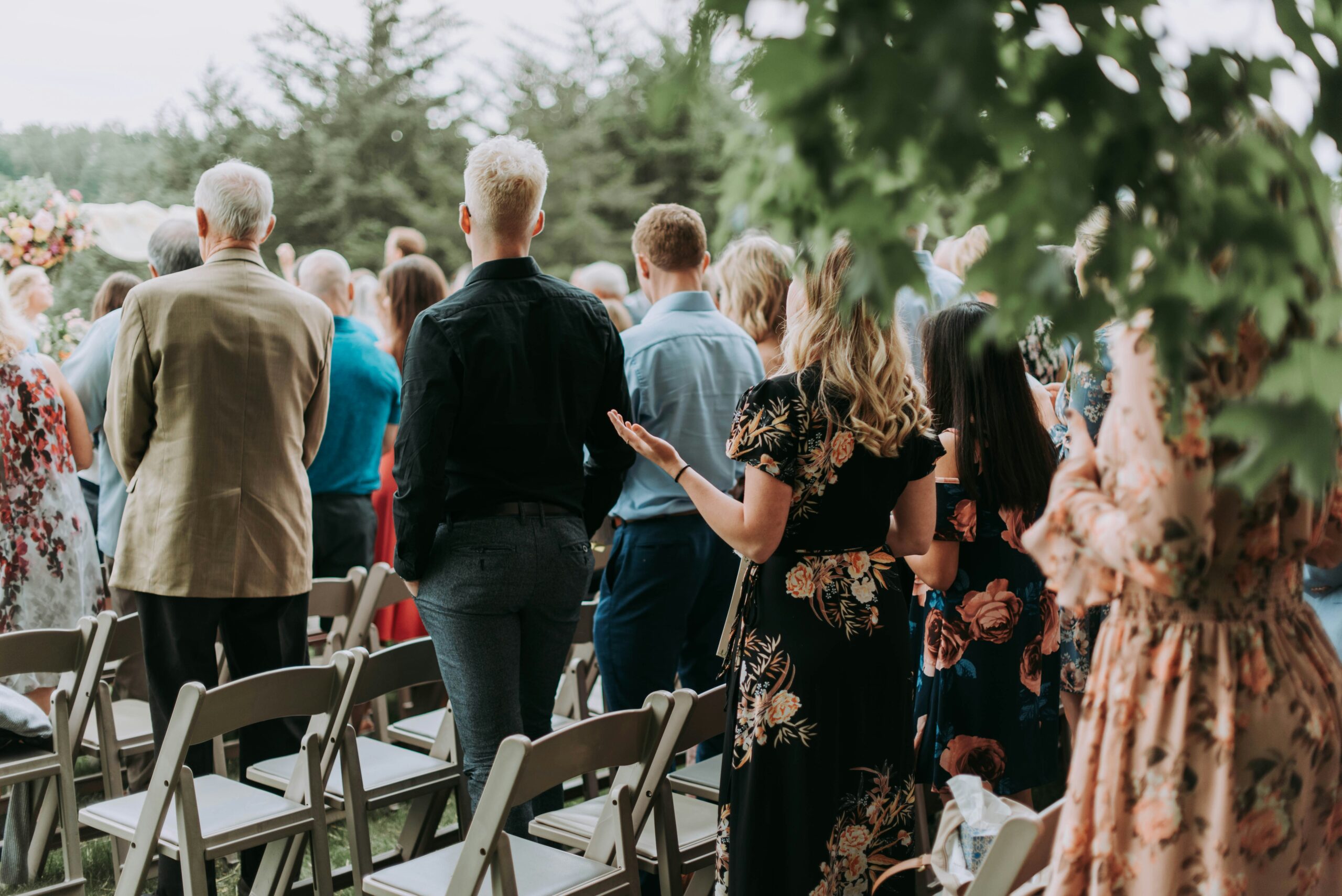
Banner image courtesy of Stephen Meeeting

Weddings thrive on harmony. Every choice, from flowers to playlists, creates the atmosphere you imagine. Guest attire, often overlooked in the early stages of wedding planning, carries more weight than many brides expect.
The clothes guests wear create visual unity and contribute to the flow of the day. A bride who takes time to define clear attire expectations reduces confusion and builds an environment where photos feel seamless and every guest is adequately prepared. Here’s our quick guide on planning and communicating the attire selection to your guests. Let’s get planning.
Select a Dress Code
Dress codes are sort of a compass, guiding your friends and family on what fits your wedding’s scale and tone. Some classic options include:
- Black tie: We’re talking suits, tuxedos, and full-length gowns. The dress code works well for ballrooms, grand hotels, or elegant evening receptions.
- Formal: A formal dress code offers more flexibility, and guests may wear tuxedos or dark suits, long dresses, or formal cocktail attire. In fact, Brides magazine reports it to be the most common wedding dress code.
- Cocktail: If you’re looking for a middle ground, it’s here. Dress options here include knee-length dresses, jumpsuits, and sharp suits without the tuxedo requirement.
- Casual: It’s the perfect dress code for outdoor weddings or relaxed beach settings. Your guests come adorned in sundresses, collared shirts, and dressy separates to keep things polished without excess.
Choose your desired dress code well before time so that it can be included in the wedding invites. A dress code gives guests direction, especially when they come from different backgrounds and style habits.
Match the Theme With the Attire
Themes are not limited to decorations. They ripple into wardrobe choices and give the day character. If you’ve already chosen your wedding colors and trends, extend them into attire expectations to create cohesion. For example, if your theme is ‘’garden romance,’’ you’ll likely have floral accents and pastels in your wedding. Guests can incorporate these colors and airy fabrics in their clothing.
Similarly, for a modern, minimalistic wedding, guests can opt for neutral tones and sleek silhouettes. At outdoor beach celebrations, the theme is usually tropical. Here, light linens, breathable fabrics, and shorter hemlines come to shine.
Don’t Forget About the Men
Guest attire guidance often focuses heavily on women, but men’s outfits also impact the cohesion in your aesthetic. A black tie event may call for tuxedos, but not every guest owns one. Guide them toward classic dark suits to keep the atmosphere intact.
Similarly, for cocktail attire, suggest suits in navy or charcoal paired with patterned ties or pocket squares. It helps to have a dos and don’ts list of wedding attire for men on your wedding website. When men’s clothing aligns with the bride’s vision, the overall theme holds together more naturally.
How to Communicate Dress Codes to Wedding Guests
The simplest way is to put the dress code at the bottom of your wedding invitation. You can also expand on this by offering examples on your wedding website. For example, share brief descriptions or color palettes. You may even share photos for inspiration. Share details with bridesmaids and groomsmen so they can answer questions from family and friends. For destination weddings or unique themes, send a friendly note with travel details to highlight special attire considerations.
Endnote
Guest attire may seem like a small detail, but it shapes the look and feel of your wedding day. When you set a clear dress code, align outfits with your theme, and communicate your expectations to guests, everyone arrives confident and prepared. The result is a cohesive celebration where your vision shines through in every detail.