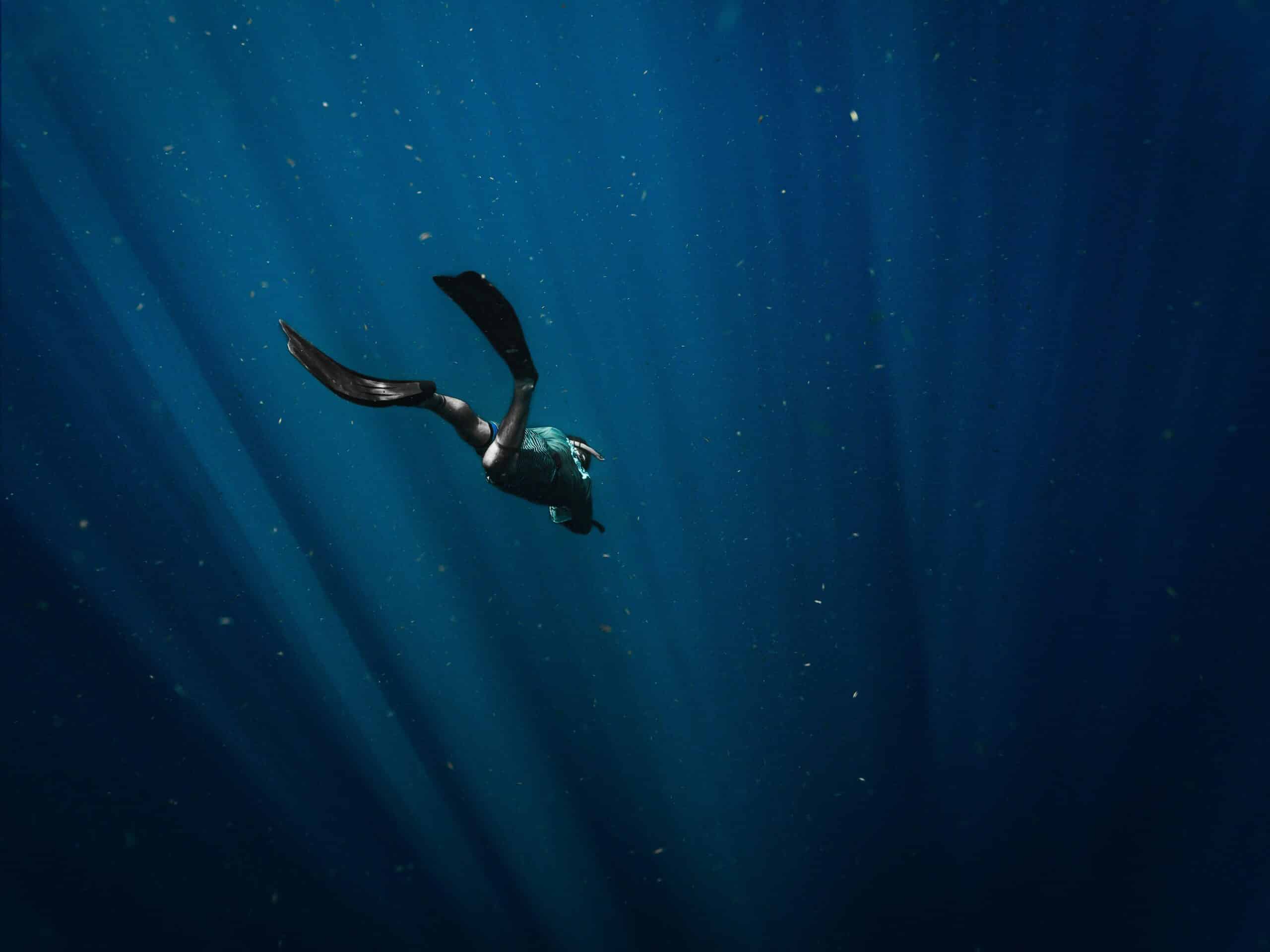
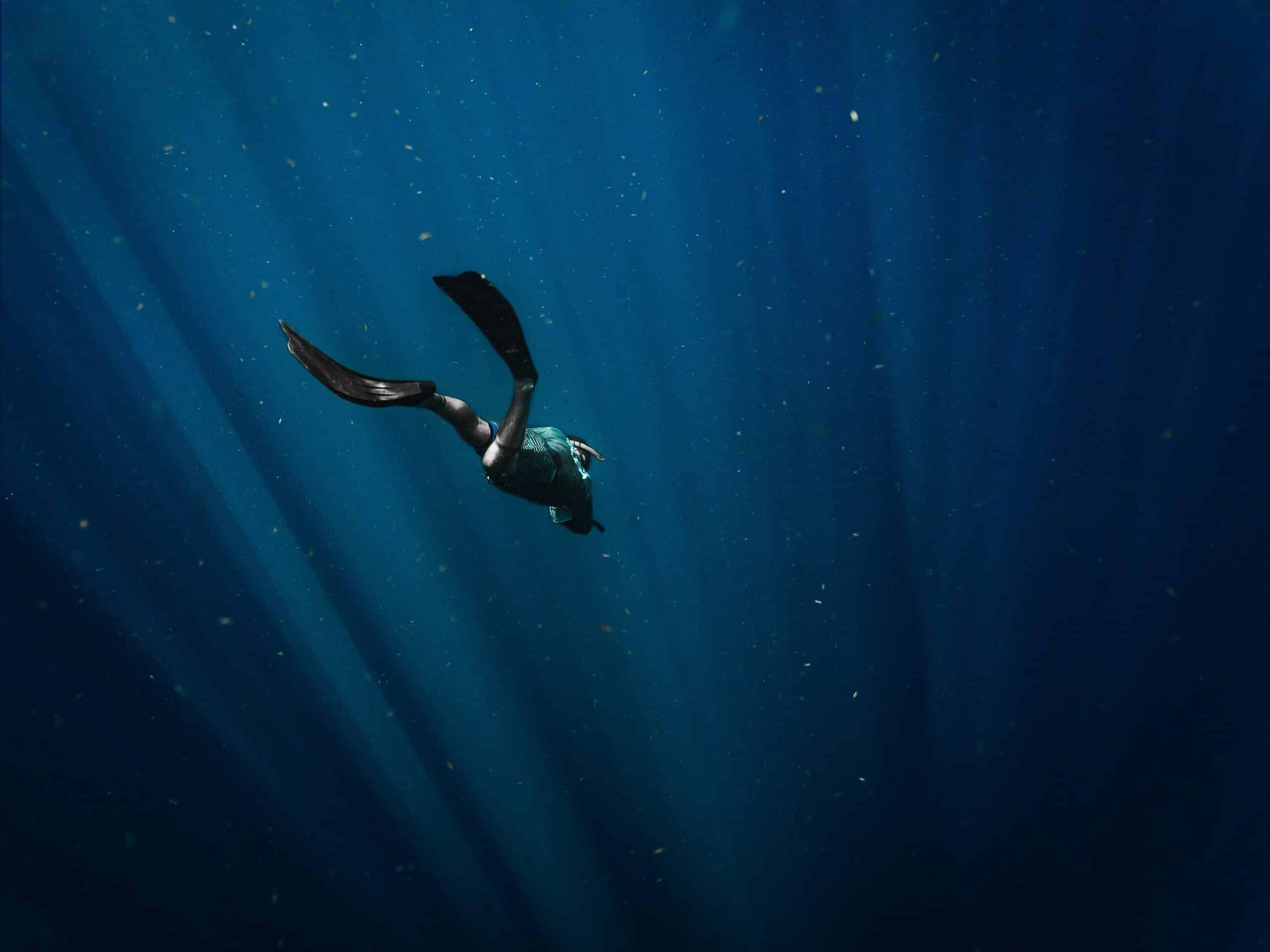
Banner image courtesy of Chase Baker
There are locations that don’t simply host an activity; they set the terms by which it is done, and Koh Tao is one of them. The unassuming Turtle Island in the Gulf of Thailand is renowned for being the world’s most convenient location to learn how to scuba dive. But look beyond the domain of air tanks and bubbling regulators, and you’ll encounter a more subdued, more challenging activity: freediving.
Diving down into the deep on a single breath is a grueling, existentially charged struggle with your physiological limits and, most importantly, your own mind.
I traveled to Koh Tao looking not merely for a certification, but for a challenge, a means of quieting the constant din of contemporary life. When you vow to hold your breath and plummet into the blue darkness, all of your fears, anxieties, and uncertainties swim to the surface, insisting that you pay attention to them before you can descend another inch.
The Journey to the Quiet
The island itself is the ideal classroom for this subject, though it’s an adventure to get there. My adventure began on land, riding on the high-speed catamaran.
Planning is everything, involving knowing what reliable Koh Samui to Koh Tao ferry time to catch. With the journey lasting approximately 1.5 to 2 hours, that time is used to switch mentally from the travel chaos to the sheer quiet of the deep. That brief period is essential in preparing the mind before you arrive on the soft, life-giving chaos of Mae Haad pier.
Freediving schools here are intense and serene. They show you that the real limit isn’t lung capacity but the primal panic reaction in your head. To break through, you have to learn to control your Mammalian Dive Reflex, which is a reflexive response that slows the heart and conserves oxygen when your face is in the water. But it’s useless if your brain is shouting “danger.” The initial days are all about breathing, meditation, and de-learning the desperate craving for oxygen.
The actual work isn’t holding the breath; it’s surrendering.
My Moment of Truth at 20 Meters
I’ve always taken pride in being level-headed, but freediving took that away from me in an instant. My confrontation occurred during a depth training session at a location with fast access to deep water. I was trying to nail a personal best, 20 meters, the stage at which positive buoyancy (floating) turns into negative buoyancy (sinking).
We were practicing on the line, the water a bright, warm turquoise shading darker at the bottom to dense, quiet indigo. My instructor nodded me down.
I took my last, full-capacity breath, the one that makes you feel like you’re filling up to your ears, and began my slow, consistent descent.
The first 10 meters were smooth, just picking up on the subtle pressure shifts and the rhythmic equalization movements (popping your ears gently). But then the light got dimmed, and as I hit the 15-meter point, buoyancy changed. I began to descend more quickly, being gravity-pulled down. That’s when the little voice began. It wasn’t a requirement for oxygen; it was an icy, extraterrestrial voice speaking in a low breath: “You are too deep. You don’t belong there. Turn back now.”
My heart rate, supposed to be plummeting into the 40s because of the dive reflex, felt like it was pounding against my chest. I experienced an ephemeral, illogical impulse to tear off my mask and paddle to the surface at frantic speed. BTW, this is a guaranteed way to get hurt. This was not a physical boundary; it was a piercing, intense mental panic. I was looking at the line, the goal marker within a few more pulls, but the raw mental opposition was a wall of concrete.
I paused, took stock, and saw that the panic was of my own creation. I shut down the dive, not because I’d used up the oxygen, but because I’d reached my plateau of mental calm. Upward came the difficult, tiring disappointment.
It took two more tries that day, failing both times at 18 meters, before I finally learned to recognize the voice of panic, smile at it, and just keep going.
The boundary, I discovered, wasn’t the sea; it was the distance between my two ears.
The Best Classrooms: Koh Tao’s Freediving Spots
Koh Tao offers a great training area because of the proximity of its varied dive sites. Most of them have ideal visibility and depth ranges well-suited for everything from pool-level beginner training through intensive 50-meter-plus dives.
For first training, places like Twins Pinnacle off Koh Nang Yuan are unsurpassable. There are shallow waters teeming with healthy coral ideal for static breath-hold training and learning proper weighting. Freedivers relish it for the proximity to deep, clean water where students can practice vertical descents on a line easily anchored without currents.
For experienced divers beyond 30 meters, serious deep-water locations are necessary. Arguably, the best of these is Chumphon Pinnacle. It is situated a 45-minute boat trip northwest of the island. Visibility can be greater than 30 meters on a good day, and the pinnacle plunges steeply away, offering safe direct access to depth necessary for serious levels of certification. It is here, hovering over the summit where whalesharks make the occasional transit, that you really are an existential dot, completely dependent on your own preparation and calm.
The Existential Takeaway
What freediving will teach you is that panic is an option. Your body is a lot stronger than your fear tells you. The aim is to dive deeper into the present than you dive into the water. Each dive is an intense type of meditation, where the penalty for a distracted mind is instant physical suffering. You learn to hear your body’s requirements without getting them confused with your mind’s terrors.